10-Minute Stress Test
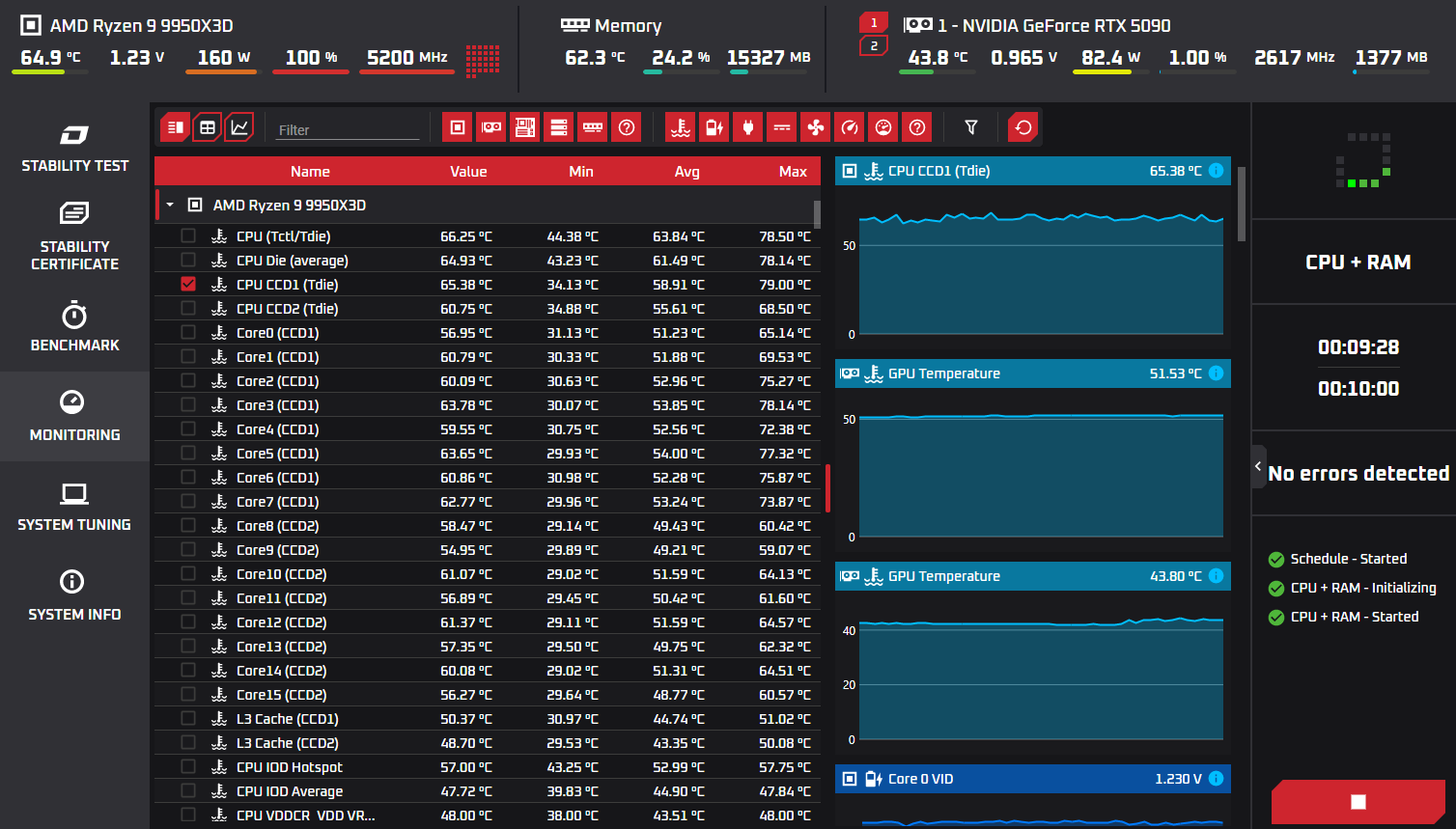
Sustained CPU and memory stress testing was performed using OCCT with the processor operating at 100% load.
Component Engineering · System Integration · Thermal Design · Validation
Designed and assembled a custom high-performance workstation from individually sourced components, beginning with requirements, compatibility and feasibility assessment before moving into physical system integration.
Particular attention was given to component layout, cooling, airflow direction and fan placement to ensure that the final configuration could operate reliably under sustained CPU and GPU workloads.
The completed system was subsequently validated using dedicated stress-testing and hardware-monitoring tools.
Components were researched and sourced individually rather than selected as a predefined system.
The design process considered physical compatibility, available installation space, power requirements, cooling requirements, component interfaces and the interaction between major system elements.
The objective was to create a high-performance machine while maintaining a coherent thermal and mechanical configuration.
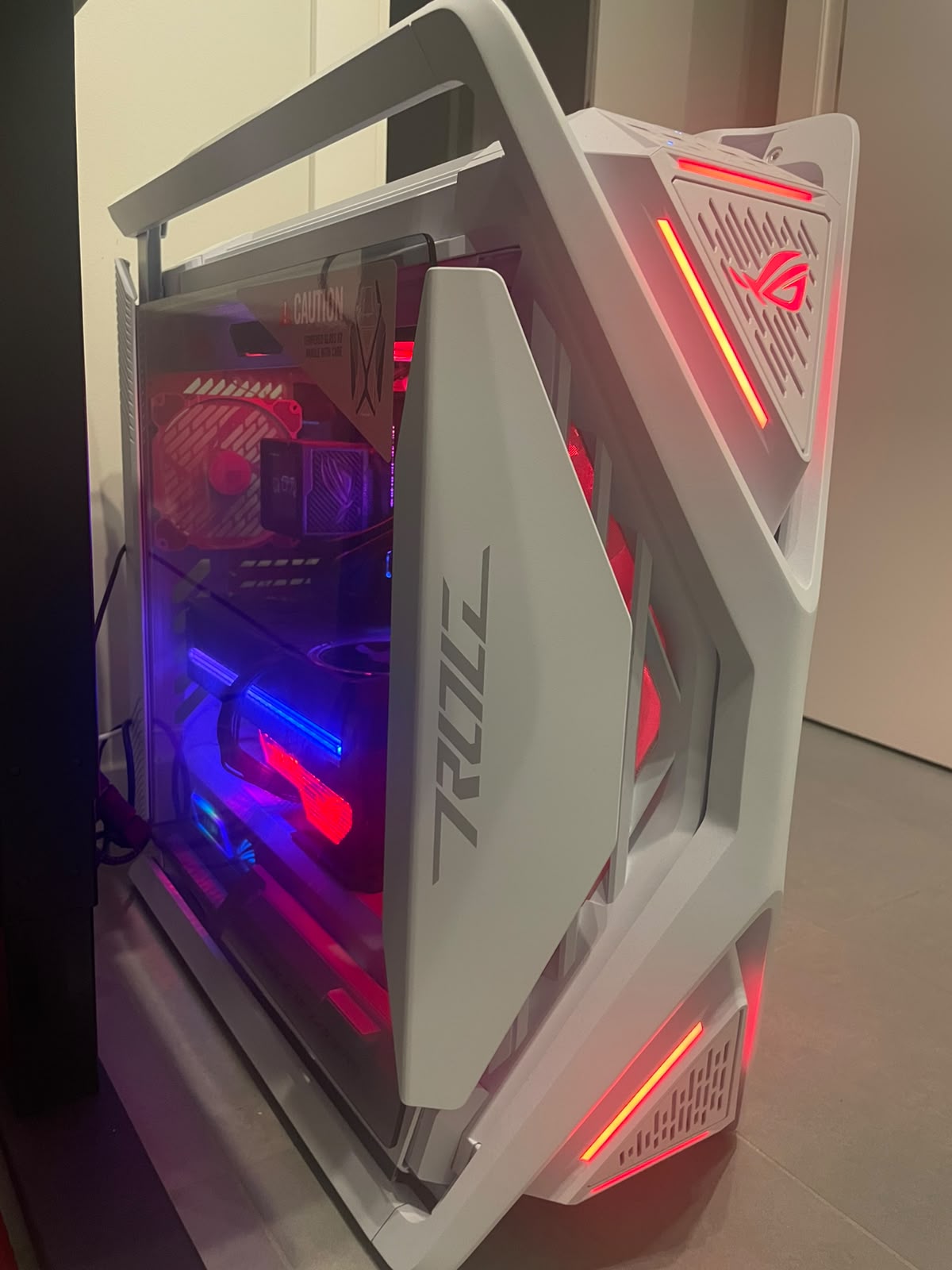
Assembly involved installation and integration of the motherboard, processor, memory, storage, graphics hardware, power supply, cooling system and case ventilation.
Component placement and cable routing were considered alongside cooling performance so that airflow paths remained as unobstructed as practical.
The system was progressively assembled and checked throughout the build rather than treating validation as a final-only activity.
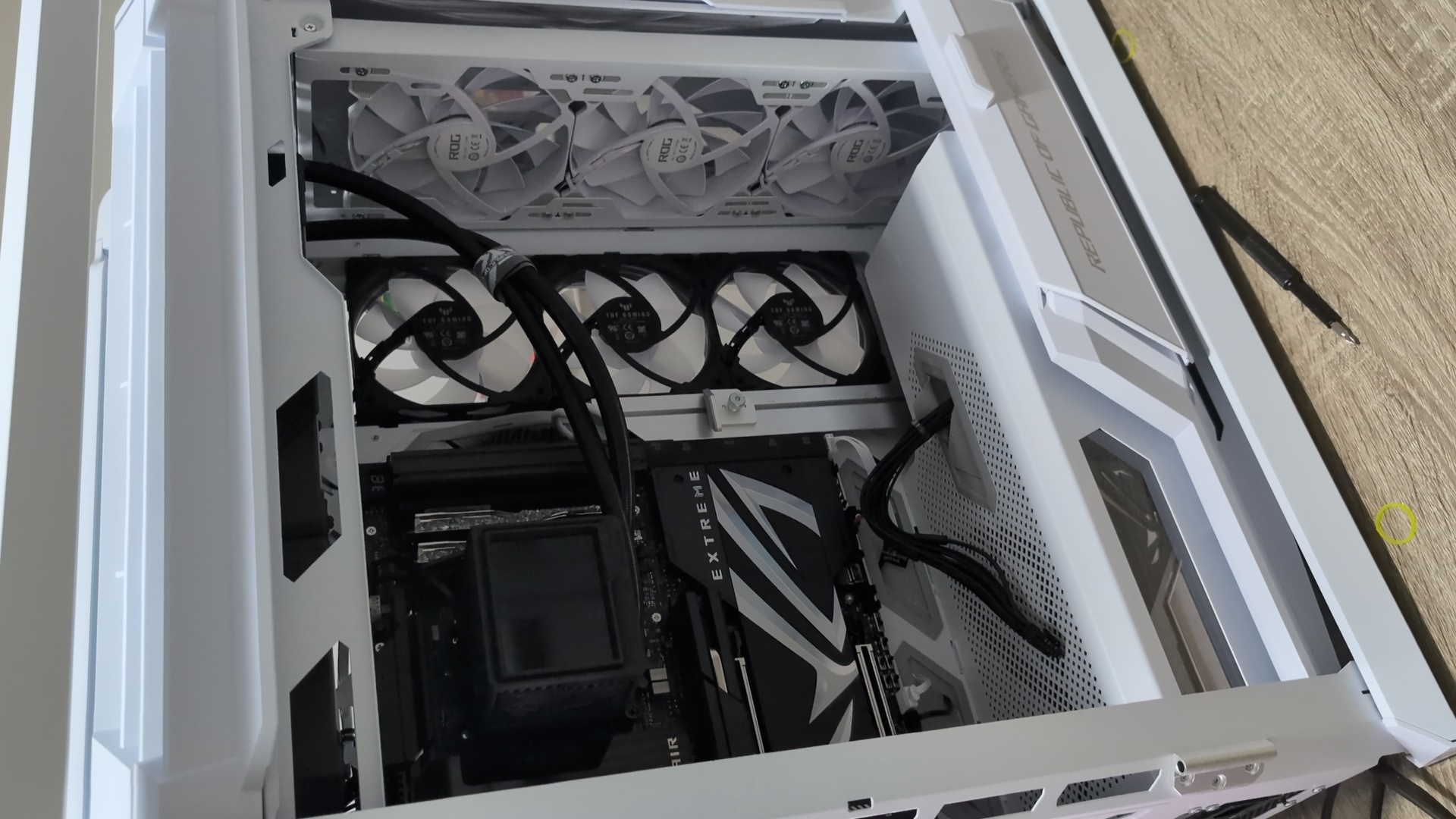
The internal arrangement was evaluated with particular attention to the CPU cooling system, graphics card heat output and the movement of air through the enclosure.
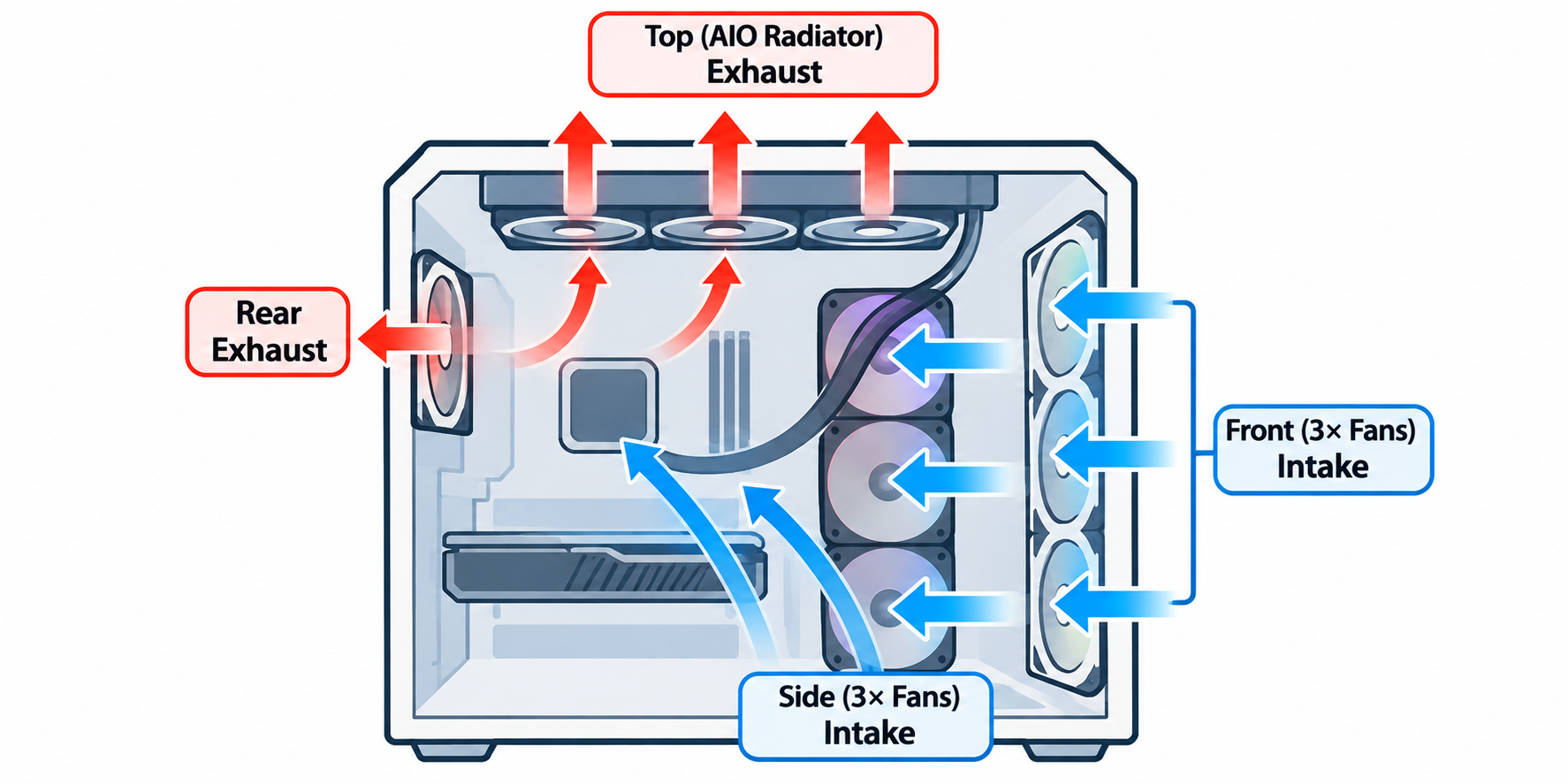
Fan locations and airflow directions were configured to create defined intake and exhaust paths rather than relying on uncontrolled circulation inside the case.
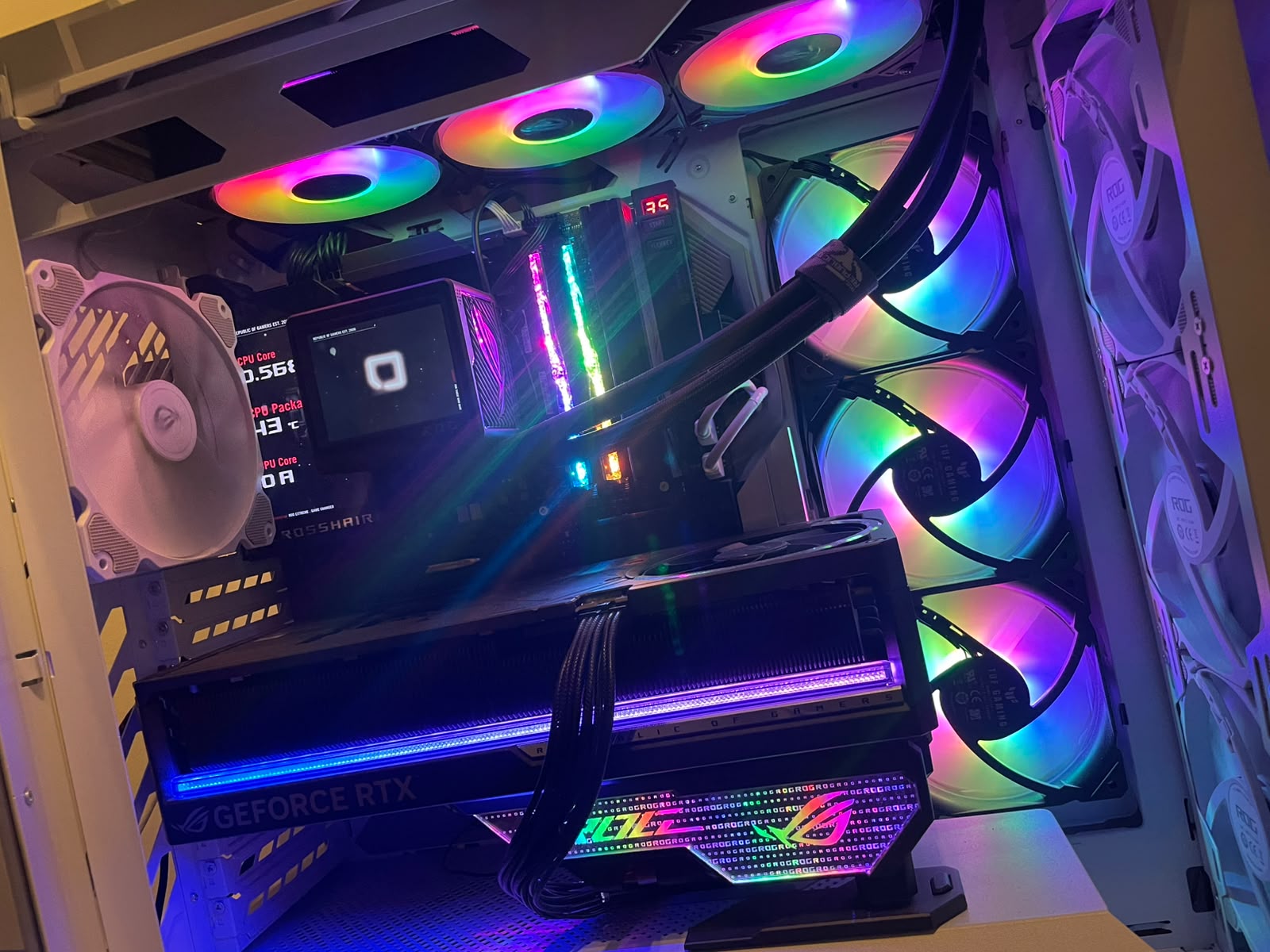
The final configuration uses dedicated front and side intake fans to supply cooler external air to the main system components.
Heated air is removed through the rear exhaust and through the top-mounted AIO radiator.
This establishes a deliberate airflow path across the CPU, GPU and surrounding components instead of allowing warm air to remain trapped inside the enclosure.
THERMAL VALIDATION
Sustained CPU and memory stress testing was performed using OCCT with the processor operating at 100% load.
Peak CPU temperature remained below approximately 80°C during the validation run.
OCCT completed the CPU and RAM validation without reporting stability errors.
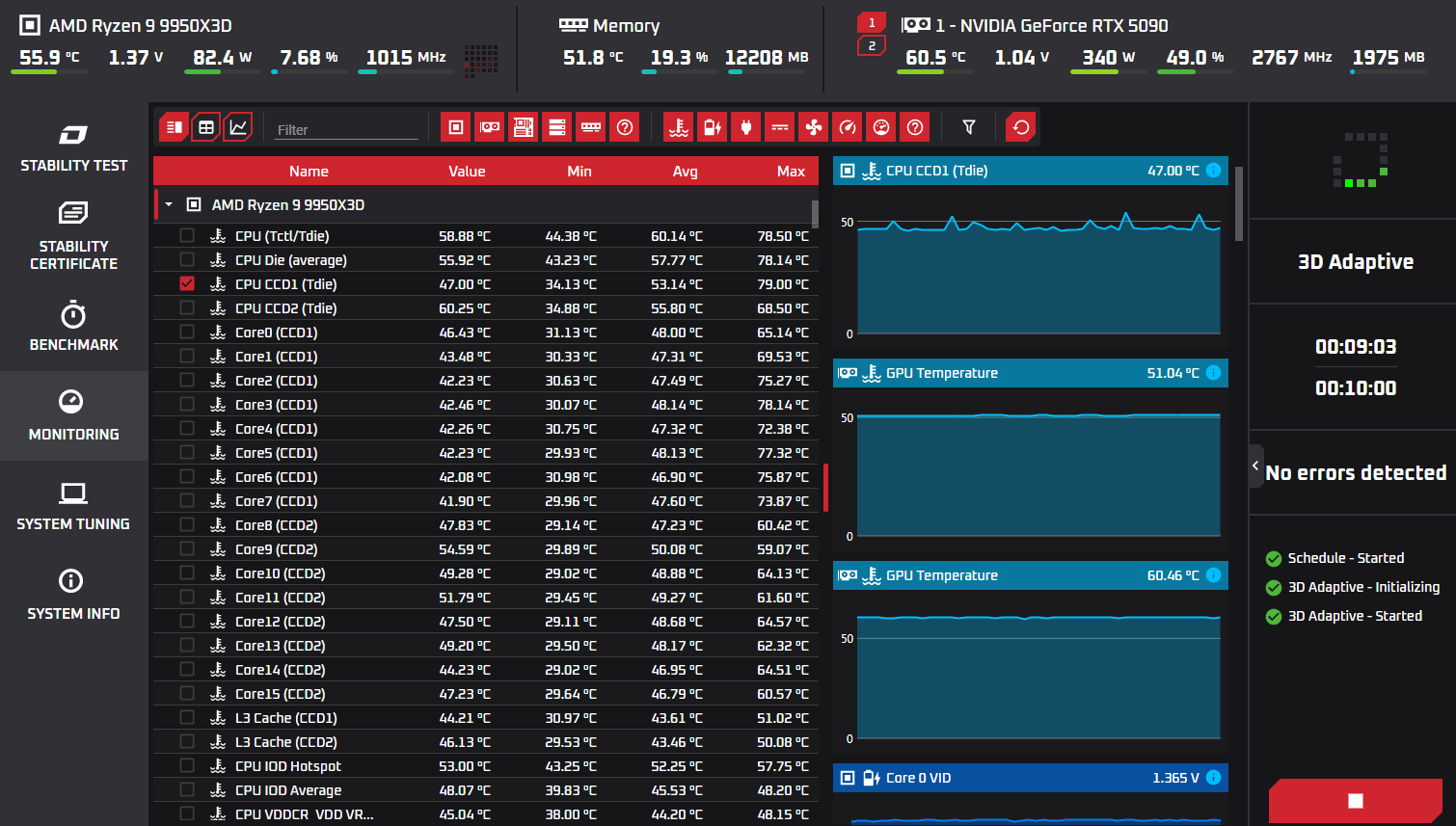
The graphics subsystem was validated separately using the OCCT 3D Adaptive workload.
GPU temperature remained around 60°C during the sustained graphics workload.
The GPU validation completed without OCCT reporting errors during the test.
The processor was subjected to a 10-minute CPU and RAM stress workload using OCCT.
During the test the CPU reached 100% utilisation and approximately 160 W package power, with a recorded peak temperature of approximately 79°C.
No OCCT errors were detected during the validation period.
A dedicated OCCT 3D Adaptive stress workload was used to validate graphics stability and thermal performance.
During the test the GPU operated at approximately 340 W while maintaining a temperature around 60°C.
No errors were detected during the 10-minute validation run.
The project progressed from component research and feasibility through physical assembly, thermal planning, airflow optimisation and final system validation.
Stress testing demonstrated stable CPU and GPU operation with controlled temperatures and no reported OCCT errors during the completed validation runs.