Home Assistant
Central automation platform coordinating lights, plugs, sensors and other locally integrated devices.
Local-First IoT · Networking · Virtualization · Software · Automation
Designed and built a self-managed home infrastructure and automation platform focused on local operation, privacy, network isolation and reduced dependency on external vendor cloud services.
The environment combines virtualization, custom software, home automation, managed networking, private cloud storage, CI/CD, monitoring and locally integrated devices.
Developed a custom React dashboard instead of relying exclusively on the standard home-automation interface.
The application communicates with a Node.js backend running on Debian, which integrates with Home Assistant and locally managed devices.
The interface can be accessed from desktop browsers and from a dedicated Shelly wall panel installed inside the home.
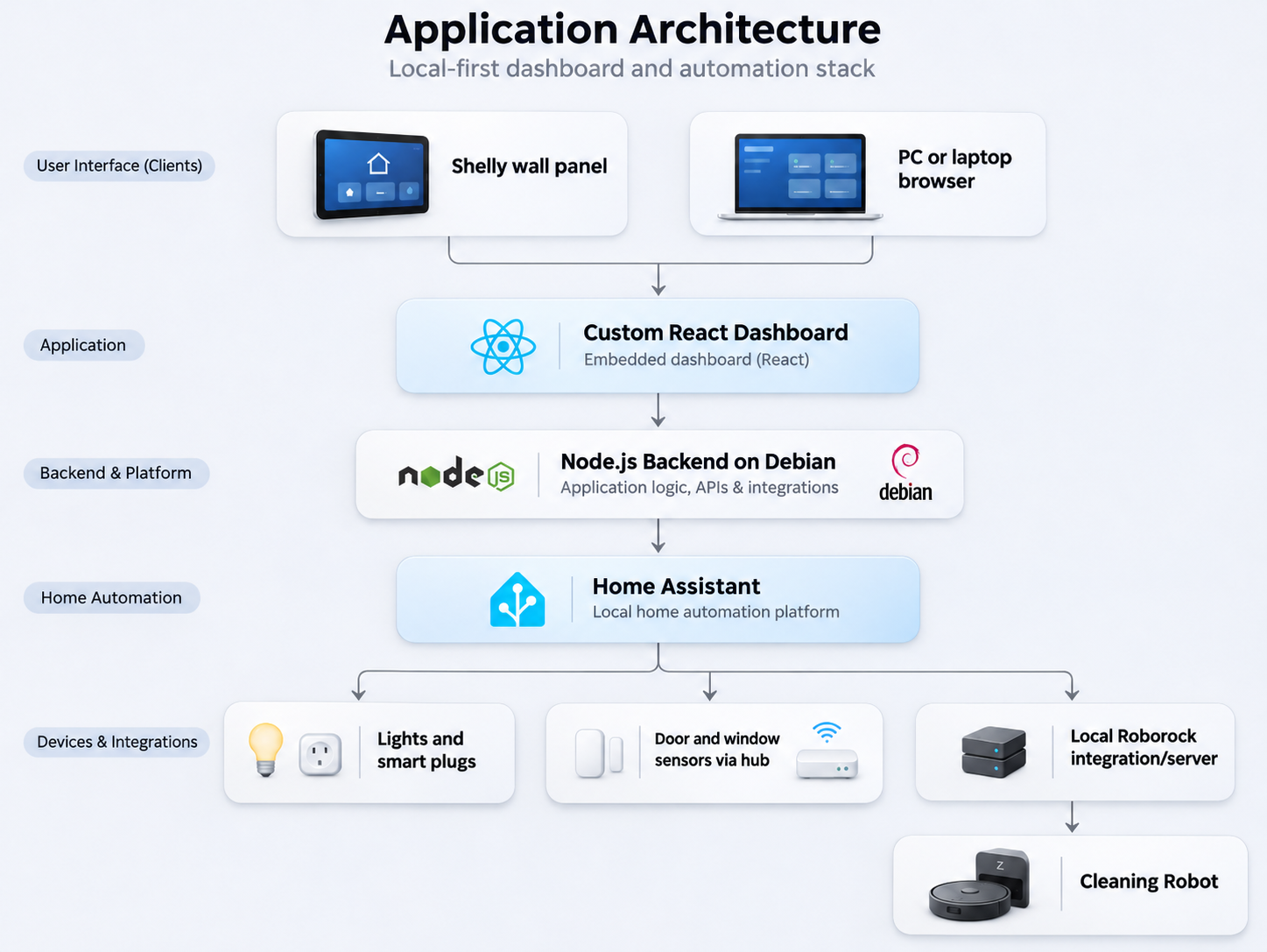
Built a managed network architecture supporting routing, switching, wireless access, automation services and segmented device environments.
Different device classes are separated rather than placing the entire home on one flat network.
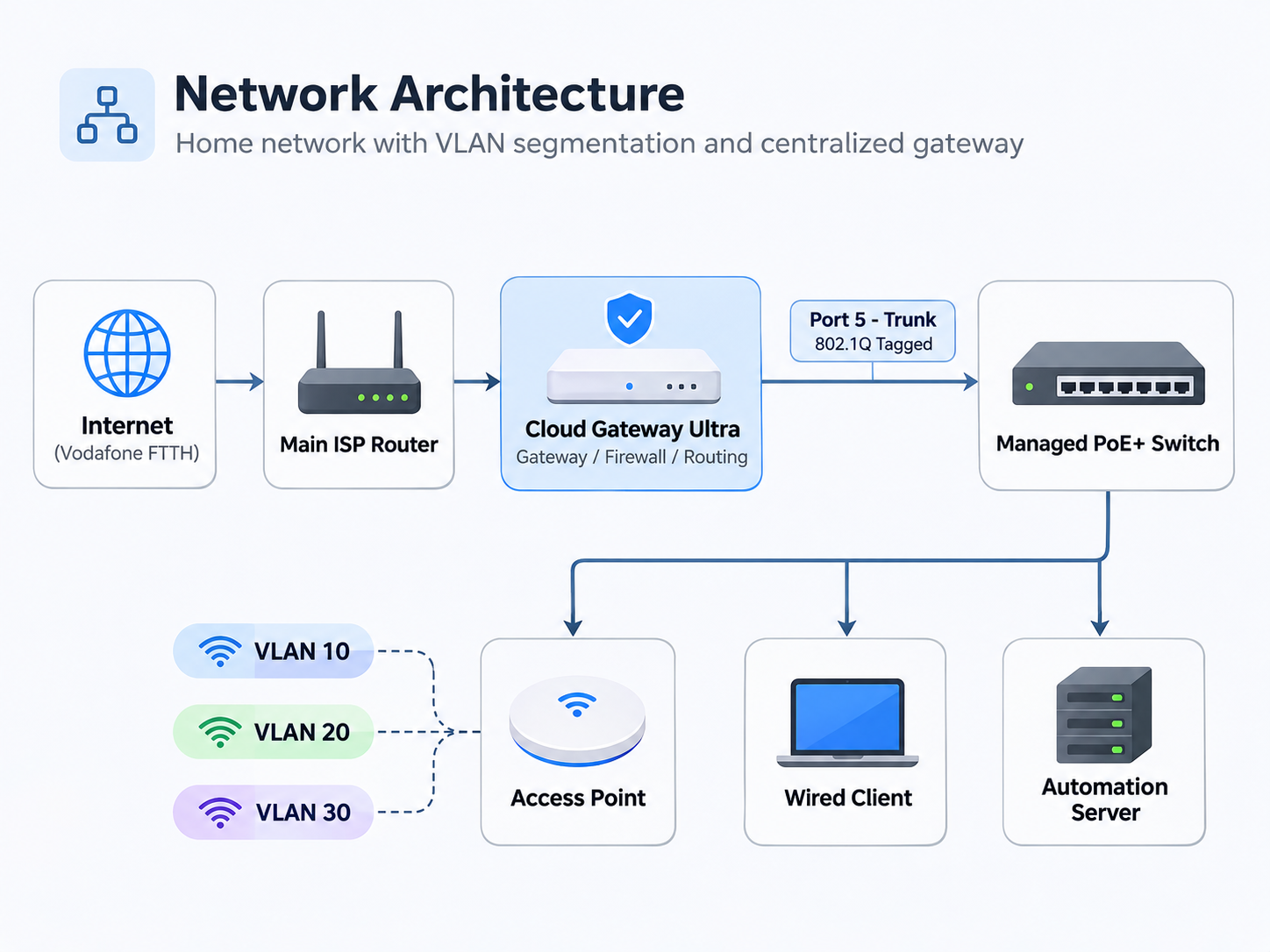
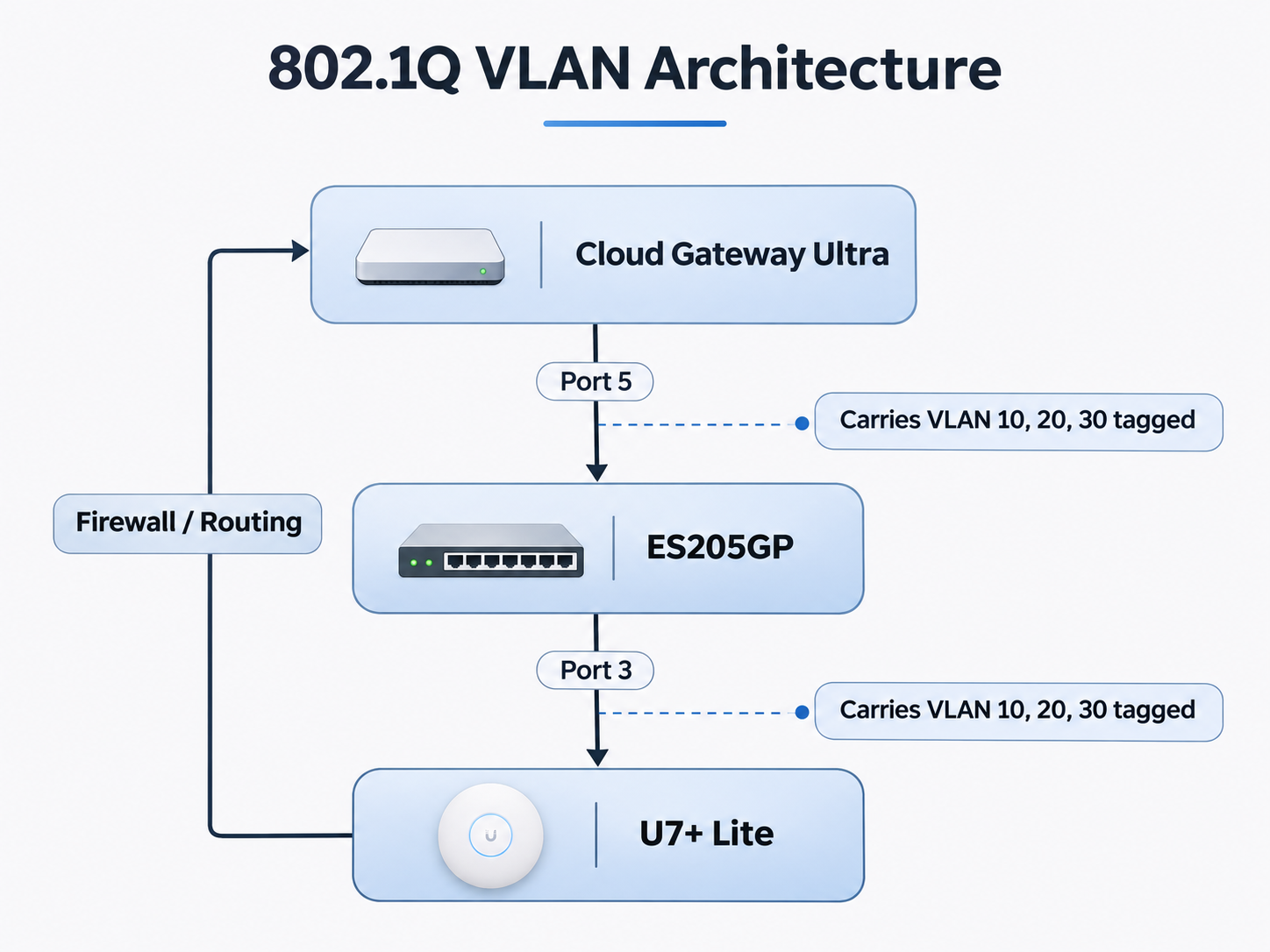
Implemented VLAN-based segmentation with 802.1Q tagging across the gateway, managed switch and wireless infrastructure.
Separate network zones allow communication policies to be applied between trusted devices, IoT devices, services, guests and other infrastructure.
VIRTUALIZED INFRASTRUCTURE
Central automation platform coordinating lights, plugs, sensors and other locally integrated devices.
Dedicated Debian service supporting local integration of the cleaning robot and reducing dependence on external vendor services.
Debian environment hosting Node.js services supporting the custom React dashboard and automation integrations.
Dedicated environment supporting automated build, deployment and verification workflows.
Approximately 500 GB of privately managed storage running inside the local infrastructure.
Logging and operational monitoring provide visibility into system behaviour, services and faults.
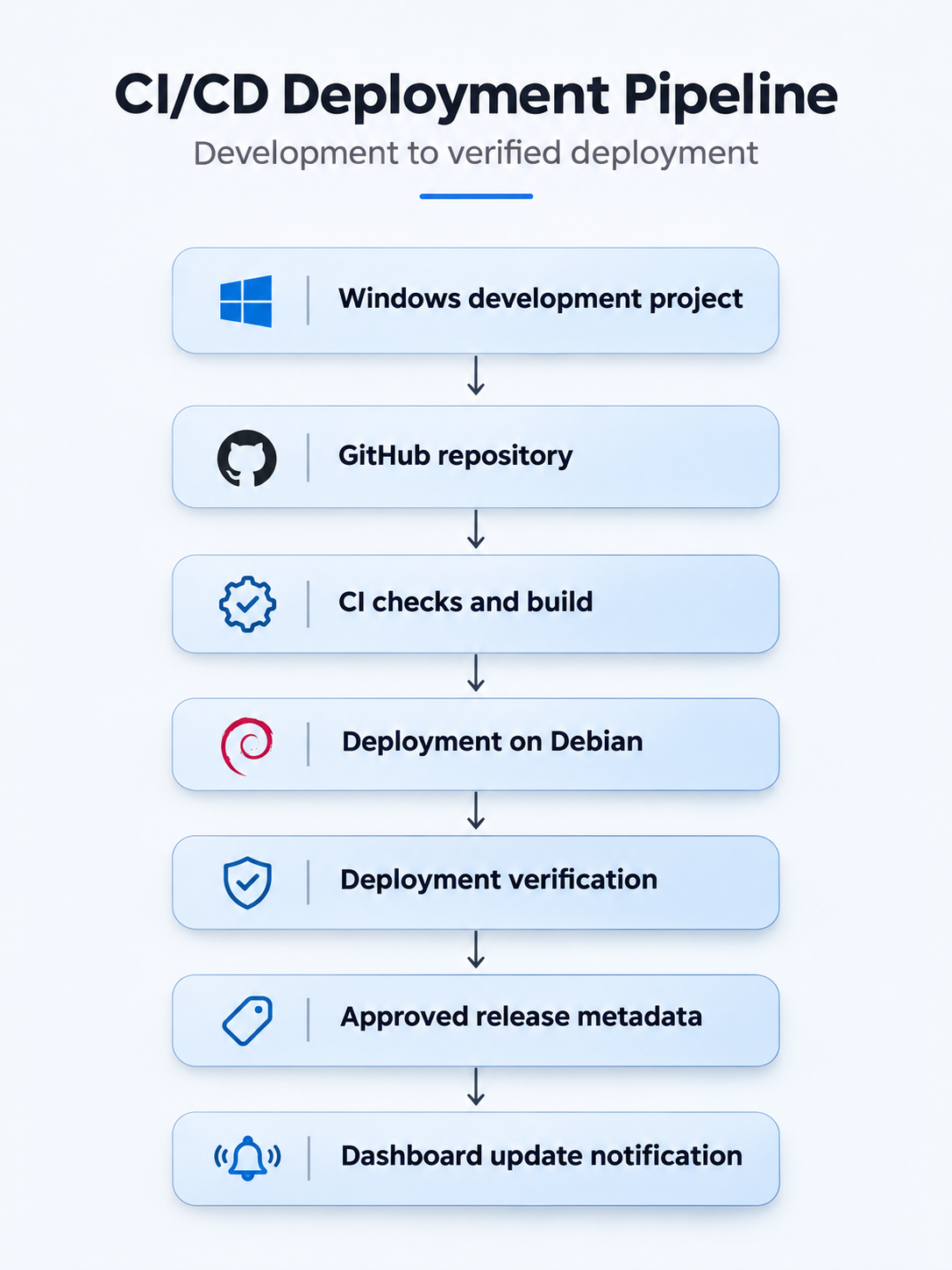
Development changes move through source control, automated checks, build, deployment and verification instead of being manually copied into the running environment.
This creates a controlled development path for continuously improving the platform.
LOCAL OPERATION & SECURITY
Device control remains on the local network wherever supported and configured.
Installation secrets are maintained outside the source repository.
Password hashes are maintained within private user configuration.
Authentication and command authorization are handled by the backend.
Guest Wi-Fi remains separated from automation and service environments.
External websites and cloud voice assistants remain outside the core local automation architecture.
The core network, automation services, custom dashboard, local device integrations, server infrastructure and private storage are already running inside the home.
Development continues as new automations, services, monitoring capabilities and integrations are introduced.